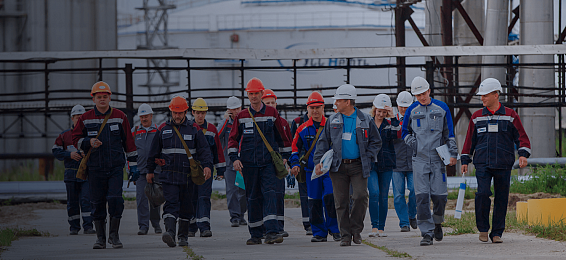
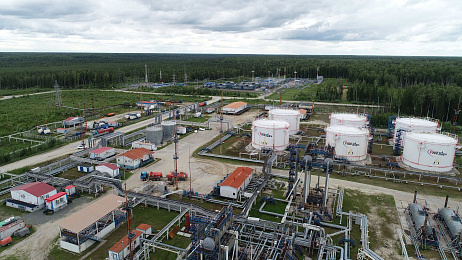
The company's press service announced the continuation of systematic efforts in environmental protection. The emphasis is made on the processing of drill cuttings, environmental control and monitoring at production facilities, as well as compensatory and public environmental campaigns.
The report states that the environmental policy of the company’s Khanty-Mansiysk branch is based on pitless drilling: drill cuttings are processed into construction materials for road construction. In 2026, the branch recycled 27,177 cubic meters of drill cuttings across two license areas, completely preventing the creation of new storage facilities; the last such facility was reclaimed in 2020.
It is also specified that improved and selection seeds of forest plants, adapted to the regional features of the planting area, are used for forest reproduction. To restore forests in Western Siberia, pine seedlings pre-grown in nurseries to a height of 12–20 cm are used.
The press service notes that during the summer period, juvenile fish raised under contracts with specialized organizations are released into river basins to compensate for the damage caused to aquatic bioresources during production activities.
Particular attention is paid to compliance with environmental legislation and the prevention of the negative impact of production on the environment.
As a reminder, in 2026, the company increased its reforestation efforts by an additional 171 hectares. Since 2017, more than 3,272,000 seedlings have been planted across an area of 875 hectares, with agrotechnical care carried out on 264 hectares. The reforestation process utilizes improved and certified seeds adapted to the region.
Also, earlier, 2,417 sterlet fry, raised and provided by the Teplovsky Fish Rearing-Farm, were released into the Volgograd Reservoir. The stocking site—the area near the village of Chardym in the Saratov Region—was chosen based on the most suitable conditions.